Feeding and Eating Therapy
When eating needs more than nutrition advice.
Sometimes knowing what to eat isn’t the difficulty.
Eating can become restricted, frightening, overwhelming or increasingly difficult. Patterns around food can become entrenched. Feeding skills may not develop as expected. Anxiety, sensory differences, appetite, body image, previous experiences or an eating disorder can all affect someone’s ability to eat.
Dr Bujtor provides specialist dietetic therapy for eating and feeding difficulties, working with children, adolescents and adults — individually, with families and in groups.

Therapy built around what is getting in the way.
There is no single approach to eating and feeding difficulties. Therapy begins with understanding what is happening and why, then selecting the approach that is appropriate for the individual, their age, their needs and the difficulties they are experiencing.
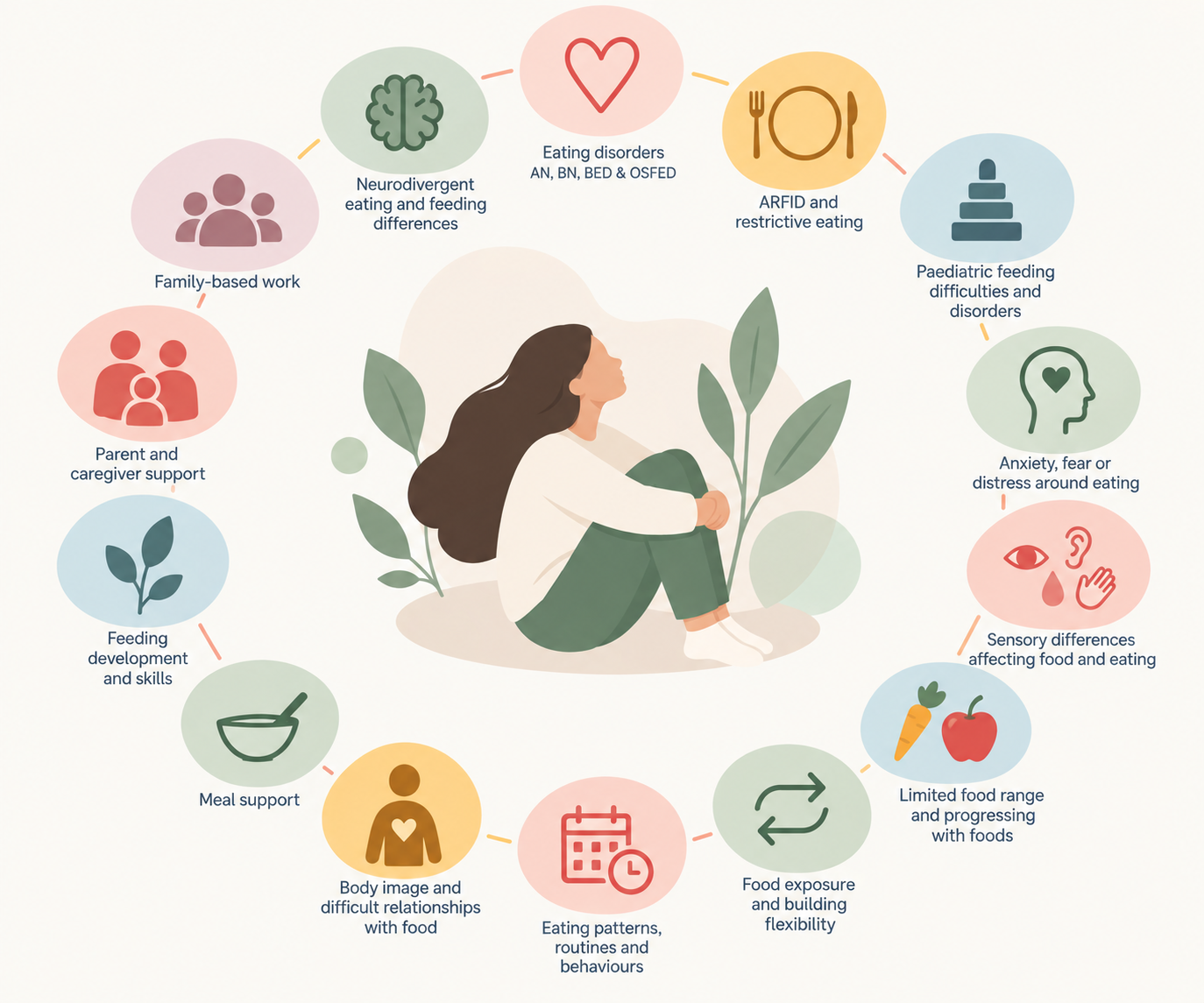
Areas of therapy shown in the diagram:
- Eating disorders, including anorexia nervosa, bulimia nervosa, binge eating disorder and OSFED
- ARFID and restrictive eating
- Paediatric feeding difficulties and feeding disorders
- Anxiety, fear or distress around eating
- Sensory differences affecting food and eating
- Limited food range and difficulty progressing with foods
- Food exposure and building flexibility
- Eating patterns, routines and behaviours
- Body image and difficult relationships with food
- Meal support
- Feeding development and skills
- Parent and caregiver support
- Family-based work
- Neurodivergent eating and feeding differences
Different difficulties need different approaches.
Therapy is individualised rather than prescribed as a standard programme. Depending on the person and presentation, Dr Bujtor may draw on CBT-E-informed dietetic practice, family-based approaches, responsive feeding, sensory-informed feeding therapy, structured and graded food exposure, SOS-informed feeding work, behavioural strategies and practical meal support.
For younger children, therapy may be play-based and centred around feeding development. For adolescents and adults, work may focus more directly on eating behaviours, restriction, fears, avoidance, nutritional rehabilitation or established eating-disorder patterns. Parents and caregivers can be actively involved where appropriate.
Sessions may be one-to-one, with parents or families, or in groups, depending on what the work requires.

Specialist dietetic care.
Eating disorders require more than general nutrition advice. Dietetic therapy can form an important part of treatment, supporting nutritional rehabilitation alongside the thoughts, fears and behaviours that affect eating.
Dr Bujtor works with anorexia nervosa, bulimia nervosa, binge eating disorder, OSFED and ARFID, providing structured dietetic intervention and working alongside other clinicians where multidisciplinary care is required.
Depending on the individual, this may include nutritional rehabilitation, establishing regular eating, meal planning and support, food exposure, addressing dietary rules and avoidance, supporting food flexibility, and working with parents or family members.
Feeding therapy.
For children and young people, difficulties with eating can arise for many different reasons. Feeding development, sensory processing, neurodevelopment, anxiety, physical symptoms, oral-motor skills, previous experiences with food and the wider eating environment can all play a part.
Feeding therapy therefore starts with understanding what is making eating difficult for this child, rather than simply trying to increase the number of foods they eat.
Explore Feeding Development →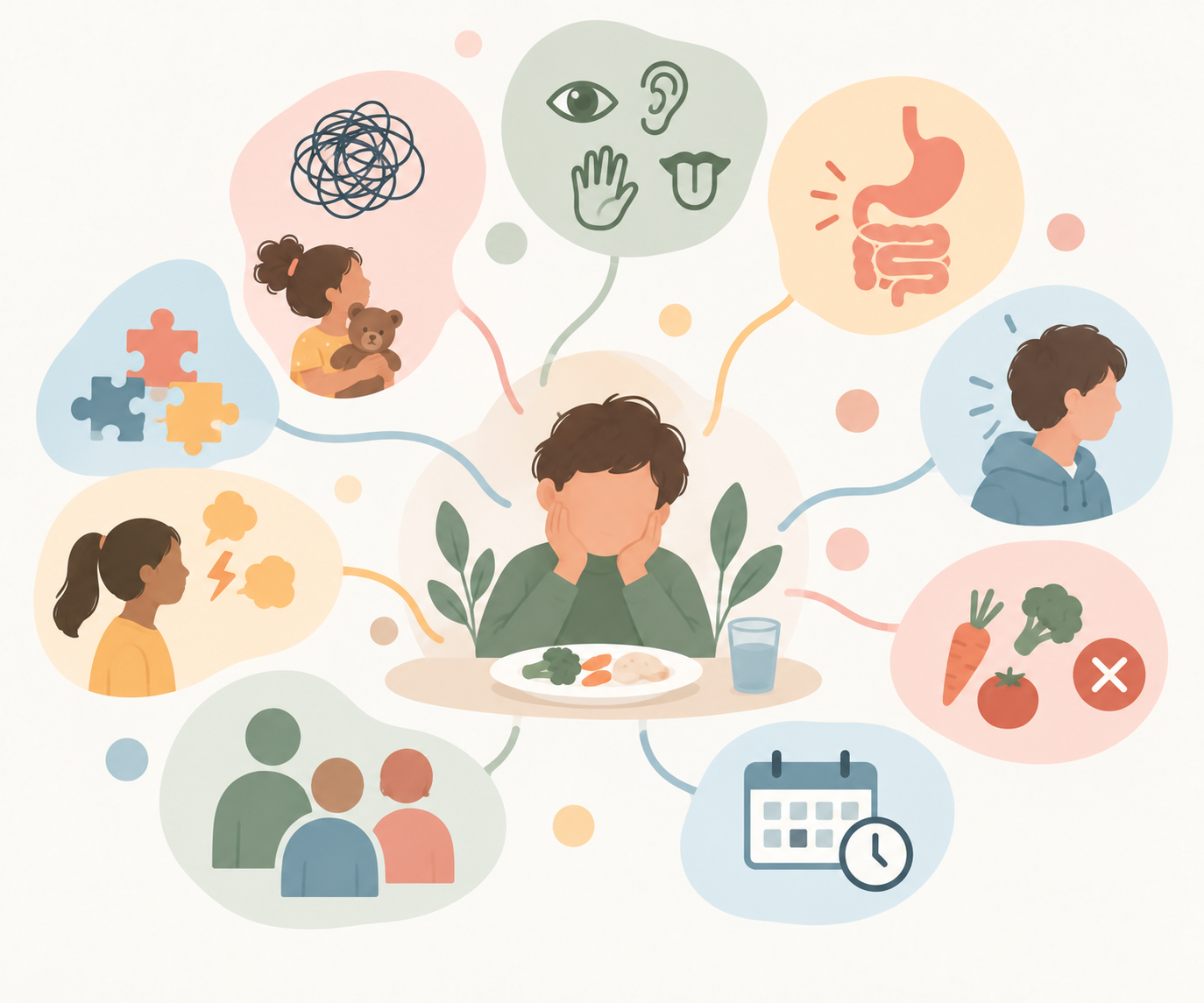
Dietetic therapy, within a wider clinical picture
This is specialist dietetic therapy. It addresses nutrition, eating and feeding using therapeutic approaches that fall within Dr Bujtor’s professional scope.
It is not a substitute for psychological therapy, psychiatric care, medical treatment, occupational therapy or speech and language therapy where these are required. Some eating and feeding difficulties are best managed by a multidisciplinary team, and Dr Bujtor may recommend involvement from a GP, paediatrician, psychologist, psychiatrist, occupational therapist, SLT or another clinician where appropriate.
Where the assessment indicates that another service is better placed to provide care, this will be discussed and appropriate onward referral or signposting recommended.
Urgent support
Eating disorders and difficulties with eating can sometimes become medically or psychologically serious. This service provides planned outpatient dietetic care and is not an emergency or crisis service. Enquiry messages are not monitored outside working hours. If you need help now, please use the routes below rather than waiting for a reply.
Please seek urgent medical help if you or someone you are supporting is experiencing:
- Fainting, collapse or loss of consciousness
- Chest pain, difficulty breathing, or a very slow, very fast or irregular heartbeat
- Severe dizziness, weakness, confusion or difficulty staying awake
- Severe dehydration, inability to keep fluids down or persistent vomiting
- Seizures
- Blood in vomit or significant gastrointestinal bleeding
- A rapid or significant reduction in food or fluid intake
- Rapidly deteriorating physical health
- Severe malnutrition or signs of medical instability, regardless of weight
- Thoughts of suicide or self-harm, or feeling unable to keep yourself or someone else safe
- Suspected or diagnosed anorexia nervosa, bulimia nervosa, ARFID or another eating disorder alongside signs of acute physical or psychological deterioration
For severe or life-threatening symptoms, call 999 or go to your nearest A&E.
For urgent medical advice, contact your GP urgently. Outside surgery hours in England, Scotland and Wales, call 111.
For an urgent mental health crisis in England and Scotland, call 111 and choose the mental health option. In Wales, call 111 and press option 2. These lines are open at any hour, for any age, and a parent or carer can call on a child’s behalf. In Northern Ireland, call Lifeline on 0808 808 8000.
You do not need to have a diagnosed eating disorder, or be at a particular weight or BMI, for symptoms to require urgent medical assessment.
For information and support, Beat, the UK’s eating disorder charity, runs a helpline on 0808 801 0677 in England, open 3pm to 8pm Monday to Friday, with separate numbers for Scotland, Wales and Northern Ireland. Samaritans is open at any hour on 116 123, and Childline on 0800 1111 is there for children and young people. None of these replaces urgent medical assessment.
Before you begin
Do I need a referral?+
No. Families and individuals are welcome to self-refer, and GPs, consultants and other clinicians are welcome to refer directly.
Are appointments in person or online?+
Both — in clinic at Springbank Clinic in Sevenoaks, or online tele-health across the UK.
What happens at the first appointment?+
A full assessment: history, current intake, relevant medical and developmental background, and what daily life actually looks like. You leave with initial direction, and a written plan follows.
Can you write to my GP or consultant?+
Yes, with your consent. Where care is shared, a summary letter helps keep everyone working from the same picture.
Is this psychological therapy?+
No. This is specialist dietetic therapy, working with nutrition, eating and feeding. Where psychological therapy is needed, it sits with an appropriately registered practitioner, often alongside this work.