Iron: why it matters
Requirements from infancy through adulthood, where iron is found, and what affects how well the body absorbs it.
Prepared by
Dr Melissa Bujtor
HCPC Registered Dietitian · AfN Registered Nutritionist (RNutr)
Paediatric Feeding Specialist
Iron is an essential mineral needed throughout life.
It is required to make haemoglobin, the protein in red blood cells that carries oxygen around the body, and it has important roles in growth, development and normal cellular function.
When the body does not have enough iron, iron stores can become depleted. If this progresses, it can eventually lead to iron-deficiency anaemia.
When iron matters most
Iron deserves particular attention during periods of rapid growth, including infancy and adolescence. Requirements are also higher for girls and women during the menstruating years, because iron is lost through menstrual blood.
This fact sheet provides general nutrition information. It does not replace individual medical or dietetic assessment.
How much iron do we need?
The figures below are the UK Reference Nutrient Intakes (RNIs). An RNI is the amount considered sufficient to meet the needs of nearly all healthy people in a group — a population reference value, not a target every individual must reach every day.
Infants & children
Adolescents & adults
All figures are milligrams per day.
These are the UK Dietary Reference Values used by the Department of Health and subsequently reviewed by the Scientific Advisory Committee on Nutrition (SACN).
The higher RNI for adolescent girls and women aged 19–49 reflects menstrual iron losses. Individual requirements vary: people experiencing heavy menstrual bleeding may have substantially greater losses, and women who continue to menstruate beyond 50 may continue to have higher requirements.
Also relevant
Iron needs and the risk of deficiency can be affected by pregnancy, blood loss, gastrointestinal conditions, impaired absorption, dietary intake and other individual health circumstances.
Iron in infancy
Babies are born with iron stores accumulated during pregnancy, and in early infancy these stores contribute substantially to meeting their iron needs.
As infancy progresses, iron stores gradually reduce while growth remains rapid. This makes iron-rich foods particularly important from around six months, when complementary feeding begins.
Alongside breast milk or infant formula, babies can be introduced to iron-containing foods such as meat, fish, eggs, beans, lentils, tofu and iron-fortified cereals — offered in forms that are safe and appropriate for that baby’s current feeding and oral-motor skills.
Milk in the first year
Breast milk or first infant formula should remain the main milk drink throughout the first year. Cow’s milk can be used in food from around six months, but should not replace breast milk or infant formula as the main drink before 12 months.
Where do we get iron from?
Iron in food occurs in two main forms, and both can contribute meaningfully to intake.
Haem iron
Found in animal tissue, particularly meat and fish. Generally more readily absorbed.
Non-haem iron
Found in plant foods, fortified foods and eggs. Absorption is more variable.
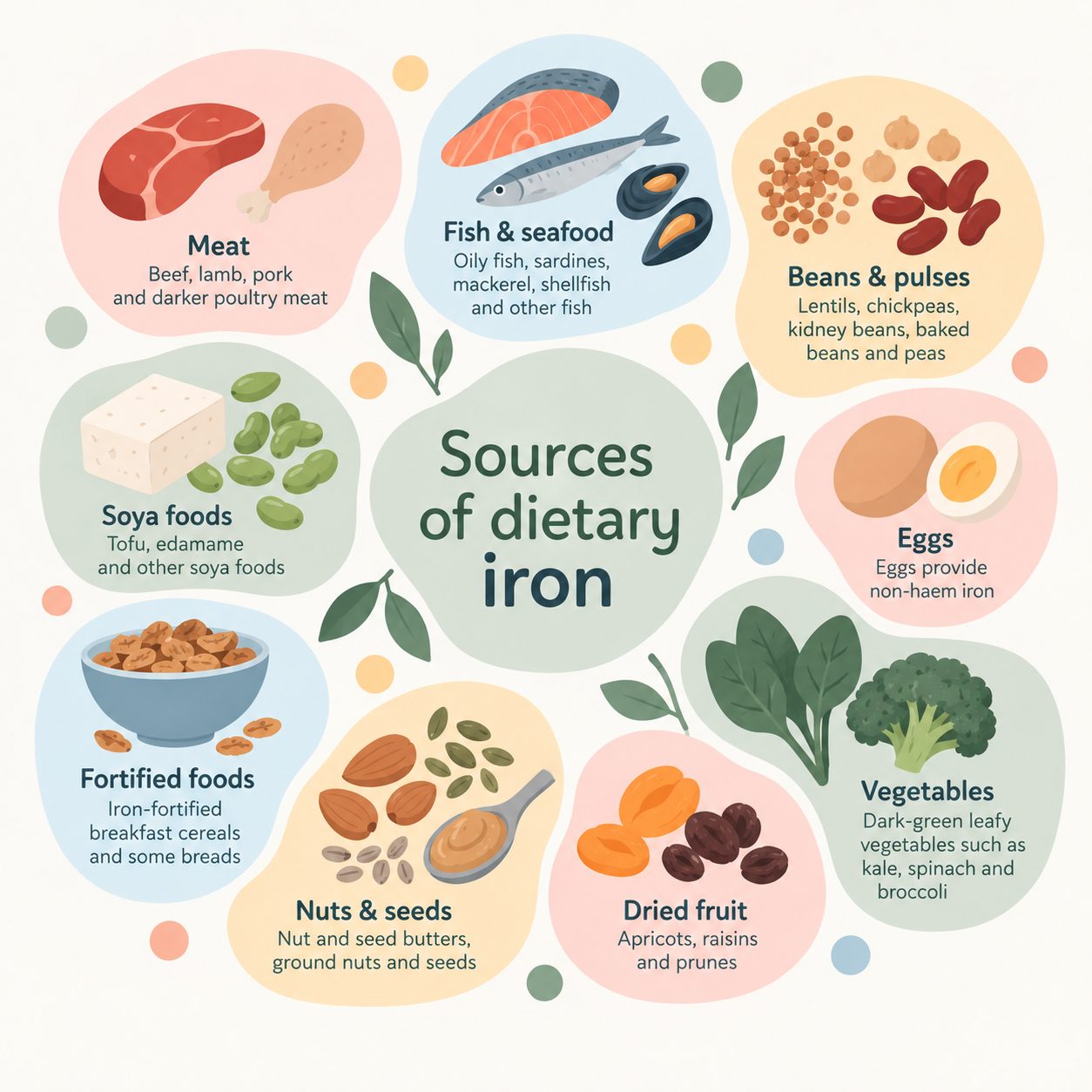
For babies and young children, foods need to be offered in a form suited to their current eating and oral-motor skills. Whole nuts should not be given under the age of five because of the choking risk; smooth nut butters or appropriately ground nuts can be offered instead.
Helping the body absorb iron
Not all of the iron present in food is absorbed. This is particularly relevant to non-haem iron, whose absorption is influenced by other components of a meal and by the wider diet.
Vitamin C can increase the absorption of non-haem iron, so pairing plant-based sources of iron with fruit or vegetables containing vitamin C can be useful.
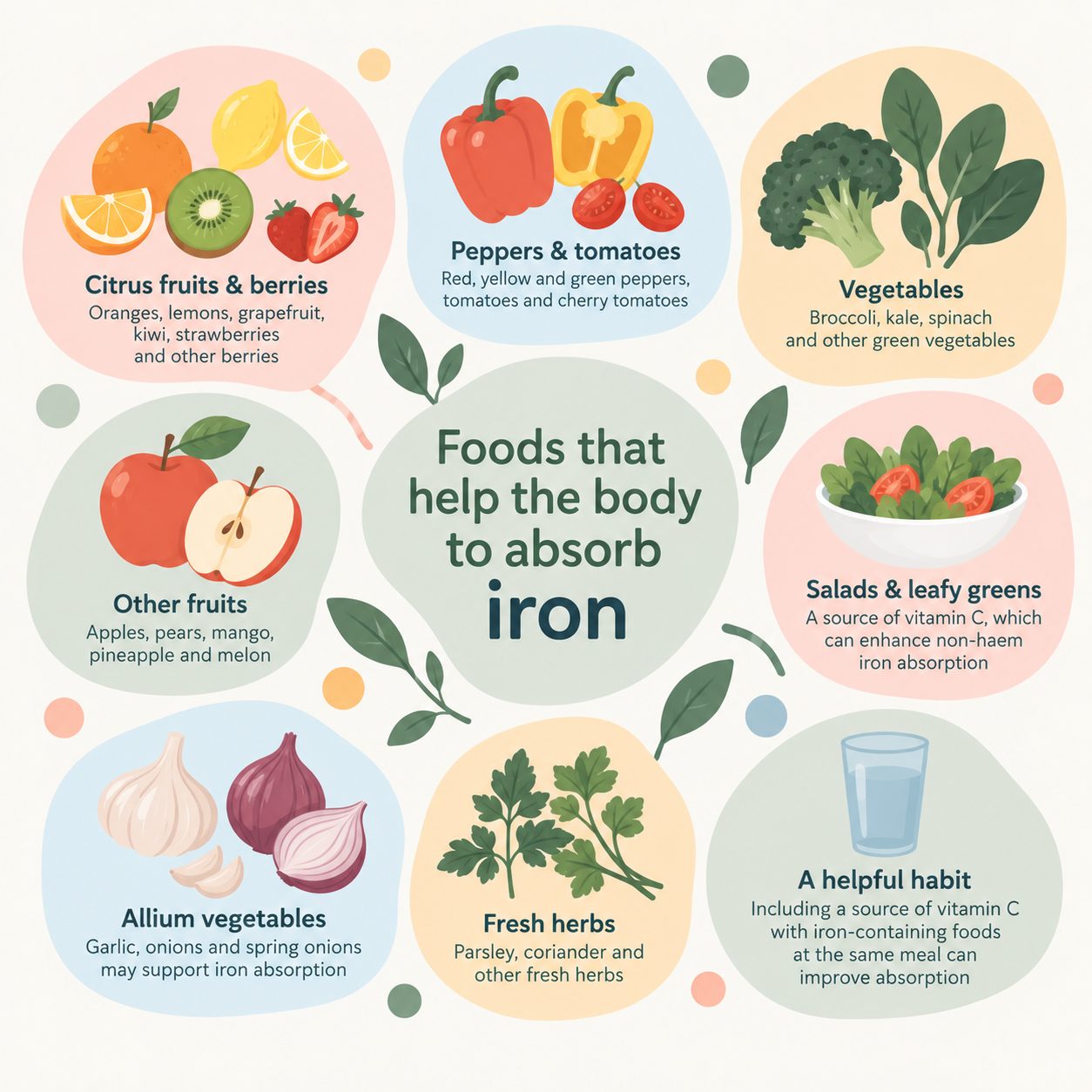
There is no need to add fruit juice specifically to improve iron absorption. Vitamin-C-containing fruit and vegetables can simply be incorporated into meals and snacks.
What can reduce iron absorption?
Tea and coffee contain polyphenols that can inhibit the absorption of non-haem iron. Phytates, naturally present in foods including grains and pulses, can also reduce absorption, and calcium can influence iron absorption when consumed at the same time.
But these effects need to be kept in perspective.
- —For most people, eating a varied diet containing regular sources of iron matters more than carefully optimising the absorption of every meal.
- —There is generally no reason to remove nutritious foods such as dairy products, pulses or wholegrains simply because they can influence iron absorption.
Where deficiency is diagnosed
Dietary intake and the timing of prescribed iron medication may warrant more individual consideration.
Iron and young children
Young children need iron to support growth and development. Because they have relatively small appetites, regular opportunities to eat nutrient-rich foods can be particularly useful.
Milk and dairy foods provide protein, calcium and other important nutrients during childhood. Children do not need to avoid dairy in order to absorb iron.
However, if a young child drinks large quantities of milk, this can sometimes reduce their appetite for other foods and mean there are fewer opportunities to eat iron-containing foods.
The aim
Not to unnecessarily restrict milk or dairy, but to support a varied overall pattern of eating with regular opportunities for iron-containing foods.
Iron without meat or fish
A child or adult can meet their iron requirements without eating meat, provided their diet contains sufficient alternative sources of iron.
Because plant-derived non-haem iron is generally less readily absorbed, iron deserves particular consideration in vegetarian and vegan diets, and for people who do not currently eat meat or fish.
Useful options
- —Beans, lentils and chickpeas
- —Tofu and other soya foods
- —Iron-fortified breakfast cereals
- —Nut and seed butters, ground nuts and seeds
- —Dark-green vegetables
- —Dried fruit
- —Fortified breads and other fortified foods
Combining plant-based iron sources with foods containing vitamin C can help increase non-haem iron absorption.
When a child eats a small or selective range of foods
Some children eat a relatively small range of foods, including children with ARFID, sensory differences or other feeding differences. For these children, advice to simply “eat more iron-rich foods” may not be realistic or helpful.
Foods may not currently be accessible for many reasons — their sensory characteristics, predictability, oral-motor skills, appetite and interoceptive differences, previous experiences with food, anxiety around eating, or differences in feeding development.
The starting point
The child’s current eating pattern, and the foods they can reliably and comfortably eat.
A dietitian can assess whether the current diet is likely to provide sufficient iron and other nutrients, and identify realistic ways of supporting nutritional adequacy within the foods and eating patterns that are accessible. Where appropriate this might include making use of accepted fortified foods, considering supplementation with the child’s medical team, or recommending further medical assessment or blood tests.
Supporting nutritional adequacy does not have to mean removing safe or preferred foods, or pressuring a child to eat foods they cannot currently manage.
What does iron deficiency look like?
Iron deficiency and iron-deficiency anaemia are related, but they are not the same thing. Iron stores can become depleted before anaemia develops; iron-deficiency anaemia occurs when deficiency progresses sufficiently to affect normal haemoglobin production.
Possible symptoms of iron-deficiency anaemia
- —Tiredness or low energy
- —Paler skin
- —Headaches
- —Shortness of breath
- —Noticeable heartbeats or palpitations
Less common symptoms can include a sore tongue, hair loss, restless legs, and pica — a desire to eat non-food substances such as ice, paper or soil.
These symptoms are not specific to iron deficiency, so iron status cannot be reliably determined from symptoms alone. Appropriate blood testing is needed to establish whether deficiency or anaemia is present.
Who may be more at risk?
Some people have a greater likelihood of developing low iron stores or iron-deficiency anaemia.
- —Babies and young children during periods of rapid growth
- —Adolescent girls and menstruating women
- —People experiencing heavy menstrual bleeding or other blood loss
- —People whose current eating pattern provides limited sources of iron
Pregnancy, gastrointestinal conditions, impaired absorption and some other health circumstances can also affect iron requirements or iron status.
For children who eat a small or selective range of foods, risk depends on the nutritional composition of the foods they do eat, rather than the number of foods alone. A small range that includes iron-fortified or naturally iron-rich foods may provide very different nutrition from another equally small range.
In adults
Unexplained iron-deficiency anaemia should not automatically be assumed to result from diet. Identifying the underlying cause is important, and gastrointestinal or other blood loss may require medical investigation.
Food first — but not always food alone
A varied diet containing regular sources of iron can help maintain adequate intake and reduce the likelihood of dietary inadequacy. But diagnosed iron deficiency cannot always be corrected through food alone.
When blood tests identify iron deficiency or iron-deficiency anaemia, treatment may include an iron medicine or supplement alongside investigating and, where possible, treating the reason the deficiency developed.
The amount of iron needed to treat an established deficiency is not the same as the amount a child ordinarily needs from their diet.
A note about supplements
The RNI values in this fact sheet refer to dietary iron requirements. They should not be used to calculate a dose of an iron supplement or medicine.
For children. Iron supplements should not routinely be given simply because a child’s range of accepted foods is small, or their diet appears low in iron, without appropriate professional advice. Where treatment is needed, the preparation and dose may depend on age, weight, clinical circumstances and blood results.
For adults. Additional iron is not always beneficial. Supplements can cause gastrointestinal side effects, interact with some medicines and, in excessive amounts, be harmful. Where deficiency has been confirmed, the preparation, dose and duration should be discussed with the relevant healthcare professional.
Iron-containing medicines and supplements should always be stored securely and out of children’s reach.
When should I seek advice?
Speak to your GP or another appropriately qualified healthcare professional if you are concerned that you or your child may have iron deficiency — particularly where there are symptoms, previous abnormal blood results, heavy menstrual bleeding, known or suspected blood loss, gastrointestinal symptoms, or an eating pattern that provides few accessible sources of iron.
A registered dietitian can assess dietary intake in the context of the whole person — age, growth and development, health, eating patterns, food accessibility and individual feeding or sensory differences — and identify realistic ways to support nutritional adequacy.
References
- Department of Health. Dietary Reference Values for Food Energy and Nutrients for the United Kingdom. Report on Health and Social Subjects No. 41. London: HMSO; 1991. The source of the UK iron RNIs reproduced here.
- Scientific Advisory Committee on Nutrition. Iron and Health. London: The Stationery Office; 2010.
- NHS. Vitamins and minerals: Iron.
- NHS. Iron deficiency anaemia.
- NHS. What to feed young children.
Important. This resource provides general nutrition information and does not replace individual medical or dietetic assessment. Requirements and treatment needs may differ according to age, growth and development, pregnancy, health conditions, blood loss, dietary intake and diagnosed deficiency.
About the author
Dr Melissa Bujtor

A HCPC Registered Dietitian and AfN Registered Nutritionist with specialist expertise in paediatric dietetics, feeding development and eating disorders.
Dr Bujtor also holds a British Psychological Society-accredited Master’s degree in Psychology, bringing an understanding of behaviour, cognition and emotional development to her clinical work with children and young people.
She is a published scientist whose work spans research, policy and advocacy, and serves on the Board of Trustees of The Feeding Trust, helping to connect research, policy and clinical practice to improve outcomes for children, young people and families.
Her clinical practice combines evidence-based dietetics with a developmental understanding of feeding — looking beyond what a child eats to understand the factors that may be contributing to their difficulties.
enquiries@drbujtor.com
01732 453956
Clinic
C/o Springbank Clinic Sevenoaks
13 Pembroke Rd, Sevenoaks TN13 1XR
Consultations
In clinic & online telehealth
Monday–Friday, by appointment